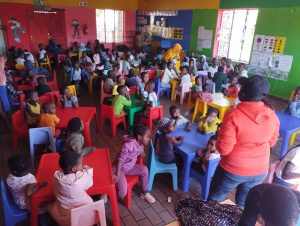

Child Poverty describes when a child is raised with little or no access to the essential resources they need to survive and live well. Children who’ve grown up in poverty often suffer compared to others because of the lack of food, sanitation, healthcare, and education they need to thrive.
Poverty is caused by a variety of sources – from day-to-day difficulties like low-paying jobs or lack of education, to unpredictable and life-changing events like the outbreak of civil war or climate change-caused droughts or hurricanes. Despite progress in many areas, poverty is still rife in Africa, particularly in Sub-Saharan Africa.
The overall poverty rate in the region decreased from 56% in 1990 to 40% in 2018. However, the total number of people, including children, living in poverty still rose. In comparison to other areas like East Asia and South Asia, the poverty rate in Sub-Saharan Africa has not fallen fast enough to keep up with population growth in the region and 433 million Africans are estimated to live in extreme poverty in 2018, rising from 284 in 1990, according to a World Bank report.
The greatest tragedy of poverty is that it quickly becomes a cycle that is hard to break. Parents who have just enough food and water to care for their children may not have the resources to buy extra seeds to diversify their crops – meaning that if the existing crop fails due to drought, they cannot provide. Children who must work rather than attend school have less opportunity to access better-paying jobs in the future. Families with little money saved are even worse off if they have to flee from a conflict than those with a certain amount saved up. Poverty can trap children but the cycle can be broken through FTHSA.